Does My Therapist Need to Understand My Race or Culture?
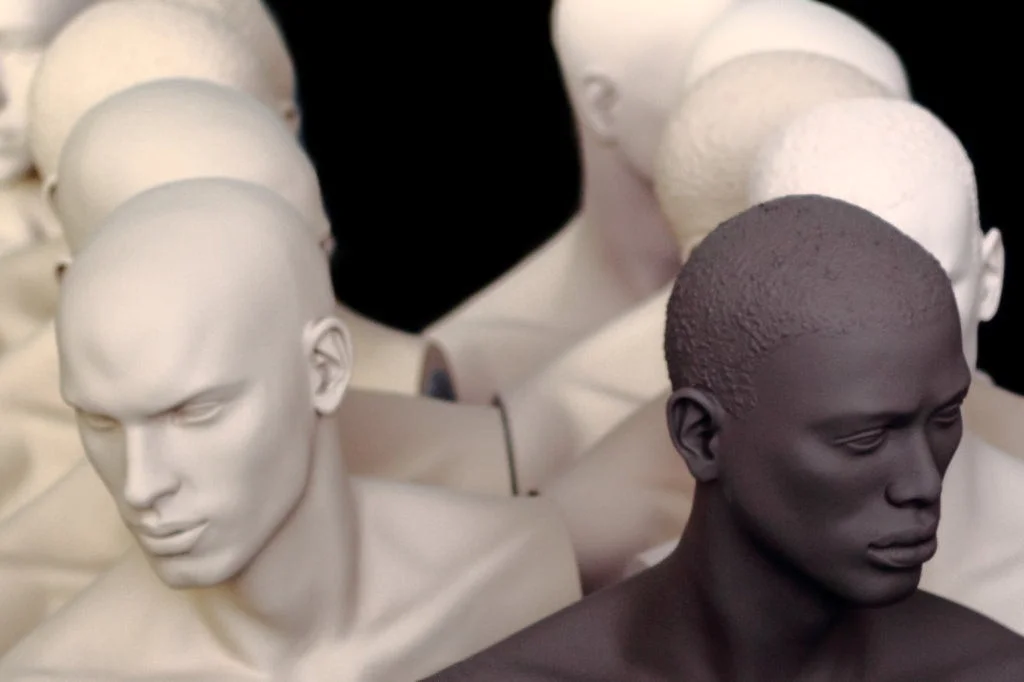
photo credit: DryHundredFear
I sometimes hear from clients who specifically sought me out because I'm biracial, and others who ask about my racial or ethnic background before deciding whether to work with me.
I understand why.
Choosing a therapist means deciding who you're willing to talk to about some very personal parts of your life. Race and culture may be central to those experiences—or they may simply be parts of yourself that you don't want to have to explain, defend, minimize, or pretend aren't relevant.
Sometimes having a therapist who shares aspects of your identity makes that easier.
But I don't think a therapist needs to look like you or share your background in order for good therapy to happen.
I do think they need to be willing to understand that your experience of the world may be different from theirs.
Race doesn't have to be the reason you came to therapy to belong in therapy
You may be coming to therapy because of trauma, anxiety, grief, a relationship, or something that appears to have nothing to do with race.
That doesn't mean race or culture won't be relevant.
They can shape families, relationships, ideas about success, expectations around gender, attitudes toward mental health, experiences of belonging, and the ways we learn to understand ourselves.
They can also affect how we're perceived and treated by other people.
Sometimes those influences are obvious.
Sometimes they're so woven into everyday life that we don't recognize them until we begin looking more closely.
And sometimes they aren't particularly important to the thing we're working on at all.
I don't want to assume either way.
There can be relief in not having to explain everything
One reason some people deliberately seek a therapist who shares their racial or cultural background is simple: they don't want to spend therapy educating their therapist.
There can be a particular kind of exhaustion in describing an experience and then having to explain why it mattered—or wondering whether the person listening believes that race was part of what happened.
There can also be experiences within families and communities that are difficult to understand without some cultural context.
A therapist with a similar background may understand certain things more readily.
That's real.
But shared identity doesn't guarantee understanding, either.
Two people of the same race can have profoundly different experiences depending on family, culture, socioeconomic background, gender, sexuality, geography, generation, appearance, and countless other things.
No therapist gets to assume, I know what this means because I've experienced something similar.
Your experience still belongs to you.
What happens when we're different?
Therapist and client are inevitably different from one another in some ways.
The question isn't whether those differences exist. It's whether there's enough room to talk about them.
If I misunderstand something because I'm viewing it through my own experience, I want you to be able to tell me.
If I say something that doesn't sit right with you, I don't want you to have to protect me from knowing that.
And if race, culture, gender, sexuality, class, disability, neurodivergence, religion, or another aspect of identity is affecting what's happening between us, that can belong in the conversation too.
A good therapeutic relationship isn't one in which the therapist never gets anything wrong.
It's one in which there is enough safety and respect to notice when something has gone wrong, talk about it, and see what happens next.
Being biracial has shaped how I think about identity
Being biracial is an important part of my own identity.
It has also given me a particular relationship with questions of belonging, difference, and the sometimes complicated experience of occupying more than one cultural space.
I don't assume that means I understand another person's experience of being biracial—or of being a person of color.
But it does mean these aren't subjects I consider peripheral to therapy.
Race can be talked about here.
So can racism.
So can cultural expectations, colorism, belonging, code-switching, mixed identity, interracial relationships, family differences, or the experience of being the only person who looks like you in a particular room.
And you don't have to make race the central subject of therapy in order to mention it.
Therapy should leave room for your whole context
None of us develops in isolation.
We are shaped by families, relationships, communities, cultures, institutions, opportunities, losses, expectations, and the ways other people respond to us.
Good therapy shouldn't reduce every difficulty to something happening inside the individual while ignoring the environment in which that person has lived.
At the same time, I don't want to explain every struggle through identity.
The work is more individual than that.
I want to understand your experience: what shaped you, what happened to you, what matters to you, what you learned about yourself, and what you would like to be different now.
Race and culture may be an important part of that story.
When they are, there's room for them here.